

 How Do Affiliate Marketing Commissions Work?
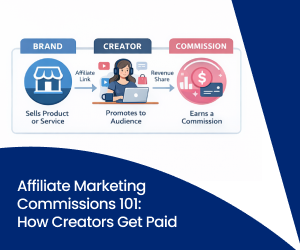
Affiliate marketing commissions are the payments publishers, creators, and media earn when they partner with a brand to drive a sale or generate a qualified lead. A product is promoted, a link clicked, and a purchase or action happens; payment soon follows.
This is a key aspect of partner marketing, using performance-based economics like affiliate marketing, but applying them across a broader mix of relationships, including creators and strategic partners. For creators and publishers, commissions make it possible to recommend products that genuinely fit their audience while turning content into a measurable revenue stream. For advertisers, affiliate marketing offers a performance-based model where spending is tied directly to real outcomes.
Commissions are the economic engine of affiliate marketing. They align incentives across brands, creators, and platforms, which is why the model continues to scale across SaaS, ecommerce, travel, and beyond.
Common Types of Affiliate Commission Structures
Every affiliate relationship starts with tracking. When a visitor clicks a publisher’s unique tracking link and completes a defined action, such as a purchase or sign up, the advertiser’s affiliate program records the transaction. The commission is then calculated and attributed according to the program’s rules.
While tracking technology continues to evolve, the payout structures themselves usually fall into three familiar categories:
1. Percentage-Based Commissions
This is the most widely used model in affiliate marketing. Publishers earn a percentage of the total sale value for each qualifying transaction they refer. For example, a $100 product with a 10 percent commission rate pays $10 per sale.
Percentage-based commissions scale naturally. As order values increase, so do earnings. This structure works especially well for ecommerce brands and content that influences higher-consideration purchases.
2. Flat-Rate Commissions
Flat-rate commissions pay a fixed amount per action, regardless of the transaction value. An example might be $5 for every new app installed or $50 for a qualified B2B lead.
This model offers predictability. Publishers know exactly what each conversion is worth, which can simplify forecasting and paid traffic strategies. The tradeoff is a potential ceiling when promoting higher-priced products.
3. Tiered or Performance-Based Rates
Some affiliate programs reward consistency and scale. As publishers drive more sales or revenue, commission rates increase automatically or through negotiated tiers. This structure incentivizes long-term growth rather than one-off wins.
Tiered commissions are common in mature partner marketing programs that value sustained performance and quality creator partnerships.
What Factors Affect Affiliate Commission Rates?
Commission rates vary widely across programs, and the differences are rarely arbitrary. Several factors influence how much a brand is willing to pay for performance.
- Industry and product category: Digital products, subscriptions, and software often support higher margins than physical goods. That flexibility shows up in commission rates.
- Brand acquisition strategy: Some advertisers allocate more budget to partner marketing because they value incremental, intent-driven customers.
- Competition and demand: Highly competitive or trending products may offer lower rates, while niche or emerging categories often pay more to attract distribution.
- Hybrid deals: These combine a guaranteed placement or sponsorship with performance-based commissions tied to tracked outcomes.
- Traffic quality and audience trust: Publishers with loyal, high-intent audiences often earn better terms through negotiation or private offers.
Across the industry, typical affiliate commission rates range from 5 to 30 percent. Some programs dip as low as 1 percent. Others climb to 70 percent or more, especially digital products and recurring subscriptions.
What is Cookie Duration, and Why Does It Matter?
Cookie duration determines how long a click remains eligible for commission credit. If a consumer clicks an affiliate link today but completes their purchase within the cookie window, the referring publisher still earns the commission.
Common cookie durations range from 24 hours to 30 days or longer. Extended windows matter most for higher-consideration purchases where research happens over time. Longer cookies mean more opportunities for publishers and creators to get paid for influence that does not convert immediately.
As browsers phase out traditional third-party cookies, modern partner marketing platforms now rely on privacy-compliant alternatives. First-party data, server-side tracking, and consent-based attribution help ensure commissions remain accurate without compromising user trust.
How to Find the Right Affiliate Program
Choosing the right affiliate program is not just about chasing the highest commission rate. Conversion potential, brand alignment, and audience relevance matter just as much. EPC, or earnings per click, adds needed context by showing how much revenue a program generates per click across the network, not just what it promises on paper.
This is where partner marketing platforms play a critical role. Instead of applying to individual programs across networks, creators can compare offers, commission structures, and terms from a single platform.
At FlexOffers, publishers, creators, and media gain access to the programs of more than 12,000 brands across ecommerce, finance, travel, SaaS, and emerging categories. Real-time reporting, privacy-forward tracking, and exclusive commission opportunities help creators focus on performance rather than administration. For creators building sustainable businesses, the right partner marketing platform removes friction and supports growth at every stage.
Affiliate marketing commissions turn content into income by rewarding measurable performance. Understanding how different commission types work, from percentage-based and flat-rate payouts to tiered models, helps creators choose programs that fit both their audience and their goals. Partner marketing succeeds when incentives align. With the right programs, transparent tracking, and trusted platforms, creators can build revenue streams that grow alongside their content.
If you have an audience and would like to earn affiliate commissions, sign up for FlexOffers’ exclusive publisher platform here.